Why a flatbed instead of a hook
A wheel-lift picks up one end of a vehicle and drags the other end down the road on its own tires. For a lot of cars that is fine. For plenty of others it is how transmissions, driveshafts, bumpers, and undertrays get destroyed, and the damage is done long before you notice it.
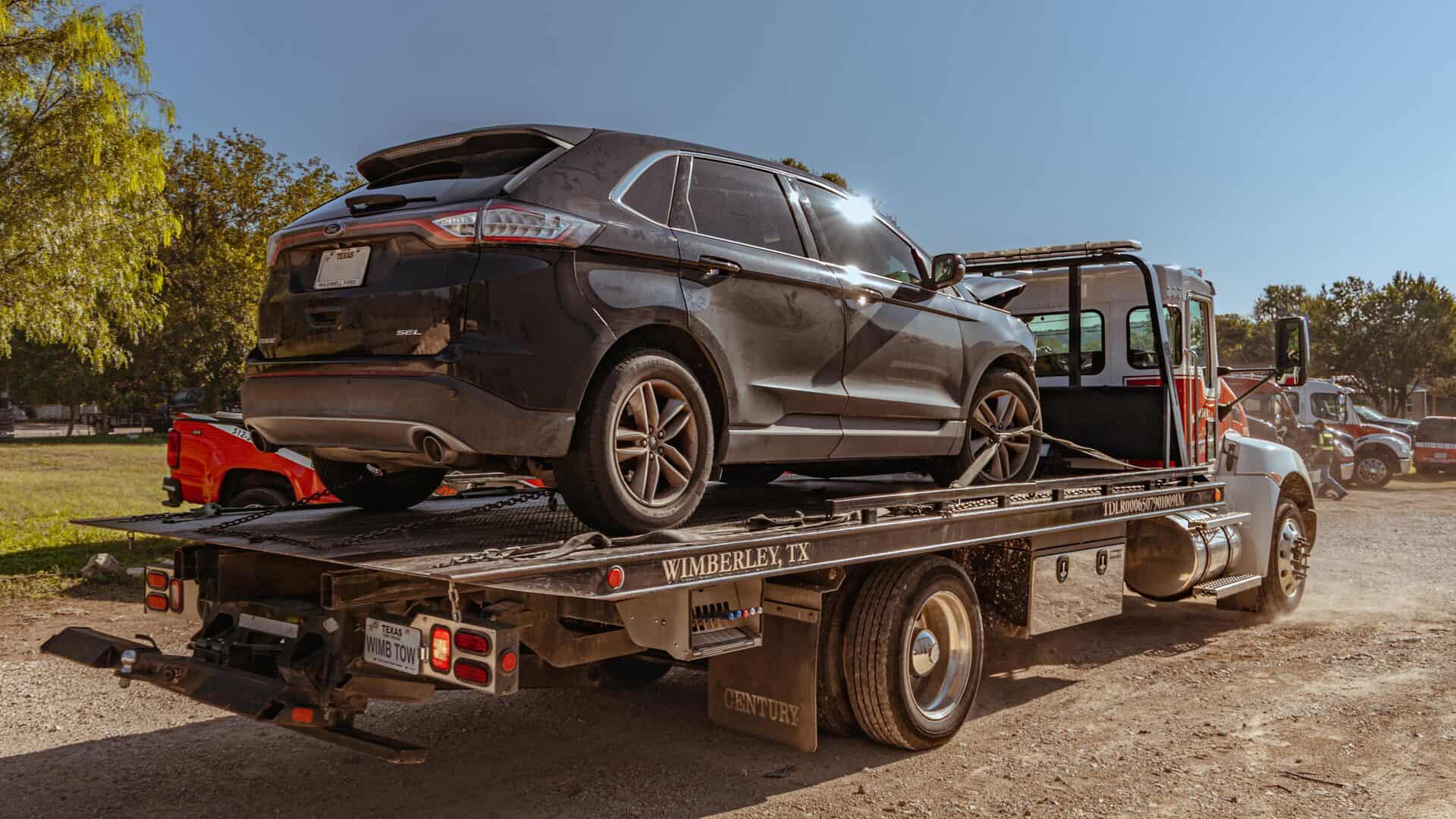
A flatbed puts all four wheels on the deck. Nothing rolls, nothing drags, nothing is loaded through the driveline. Wimberley Towing runs six flatbed trucks out of three Hill Country yards for exactly this reason.
When a flatbed is not optional
- All-wheel drive and four-wheel drive. Towing an AWD car with two wheels turning can wreck the centre differential or the transfer case. Manufacturers say this in the manual and people still get it wrong.
- Lowered, classic, and exotic cars. Ground clearance is the problem. See specialty car towing.
- Non-runners. No engine, no brakes, sometimes no steering. It gets winched on rather than driven on.
- Accident damage. A bent suspension or a seized wheel cannot roll, so it cannot be dragged.
- Anything you care about. If it is going to a dealer, a buyer, or a restoration shop, it goes on the deck.
What it means on a Hill Country road
Loading a car onto a deck needs a shallow approach angle and room to work. On a narrow shoulder on Ranch Road 12 or a caliche drive out to an acreage property, that is a real consideration, and it is worth telling dispatch what the ground looks like when you call (512) 375-1215.
If the vehicle has left the pavement entirely, the deck is a second step. Getting it back to the road is a winch job first, and that is off-road recovery.
See the full towing services range, from medium duty up to heavy duty.